
We have filed a federal lawsuit to defend the constitutional process by which Utah chooses its representatives in Congress. That fact alone matters. Until now, Utah’s redistricting disputes have unfolded almost entirely within state courts. This case moves beyond that terrain because the dispute is no longer confined to state law or procedure. It concerns the limits the U.S. Constitution places on judicial power.
We bring this action respectfully and deliberately, and without ill will toward any individual named in the case. This lawsuit is not political theater. It is not an attempt to influence electoral outcomes. It is a necessary response to a breakdown in constitutional order that, if left unaddressed, will weaken representative government in Utah in ways that will not easily be undone.
Power flows from the people through the institutions they have established, or it does not flow at all. The United States Constitution is clear: the authority to determine the time, place, and manner of congressional elections, including the drawing of congressional districts, belongs to state legislatures. Courts may review legislative action. They may enjoin unconstitutional acts. What they may not do is assume legislative power themselves.
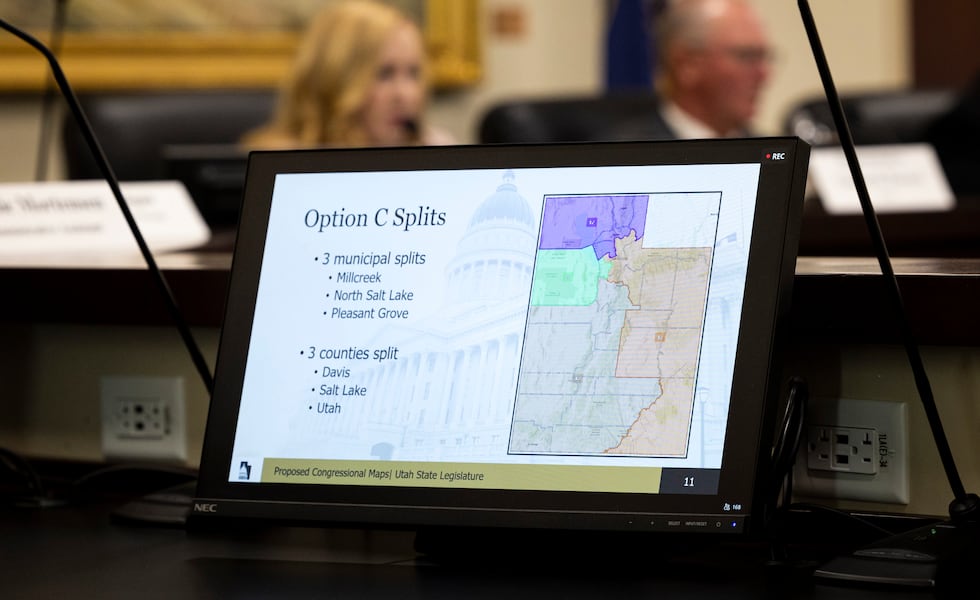
That boundary was crossed. A state court struck down a map enacted by the Utah Legislature and replaced it with a map of its own choosing. That map was drafted by private advocacy groups. It was never debated, never amended, and never adopted by the people’s elected representatives. The court did not simply review the law. It substituted itself for the lawmaking body.
This federal lawsuit exists to restore the proper constitutional balance. Because the violation arises under the federal Elections Clause, it now belongs in federal court.
The plaintiffs in this case come from across Utah’s civic life. We include county commissioners, mayors, sheriffs, and members of Congress. We are elected officials and registered voters. Some of us serve rural counties and small towns. Others represent large cities and fast-growing communities along the Wasatch Front.
These categories matter because redistricting is not an abstract exercise. Congressional boundaries shape how communities are represented and how federal priorities are advanced. They determine which voices carry weight, which concerns receive attention, and which working relationships endure.
Those relationships are built over time. They depend on geography, shared interests, and continuity. When districts are imposed by judicial order rather than adopted through the constitutionally prescribed process, those relationships are fractured without consent and without accountability.
The harms caused by this judicially imposed map are neither speculative nor partisan. Voters are left uncertain about who represents them and whether their districts will remain stable from one election cycle to the next. Counties and cities are combined or divided in ways that ignore geography, growth patterns, and community ties that local leaders understand well.
Local officials are already losing congressional partners with whom they have worked for years on public lands, water management, infrastructure, homelessness, opioid addiction, and economic development. Those efforts do not simply pause because a map has changed. They stall.
Candidates and incumbents alike face confusion as filing deadlines approach. Campaign plans are being redrawn while calendars fill and resources are committed, all under rules that may not ultimately apply.
For public officials bound by oath, the harm runs deeper. Some are being compelled to implement a map they believe violates the U.S. Constitution they swore to uphold. No public servant should be placed in a position where fidelity to the law and compliance with a court order appear to pull in opposite directions.
These are not political inconveniences. They are injuries to governance, accountability, and public trust. Utahns across our state are being pushed to act to defend representative government, and this lawsuit reflects that reality.
Lt. Gov. Deidre Henderson is named in this lawsuit because the law requires it. As Utah’s chief election officer, she is responsible for implementing congressional maps. Naming her is a legal necessity, not a personal accusation. We do not allege malice, bad faith, or improper motive on her part.
To the contrary, this federal lawsuit seeks to relieve her of being compelled to carry out a state court order that exceeds federal constitutional limits. The present posture places her in an untenable position, caught between judicial instruction and constitutional command.
It is predictable that some media coverage will attempt to frame this case as a conflict between the plaintiffs and the lieutenant governor. That framing may generate attention, but it would be inaccurate. It would reduce a serious constitutional dispute to a personal narrative that does not exist.
This case is not about individuals. It is about roles, authority, and the rule of law.
This lawsuit is not an effort to control political outcomes. It is not an attempt to advantage one party or disadvantage another. It is not a referendum on whether districts should be competitive or compact or on how political balance ought to be measured.
Those debates belong in the Legislature, where proposals can be introduced publicly, amended openly, and resolved by representatives accountable to voters.
This case is about process and about the federal constitutional limits on judicial power. When the process is disregarded, outcomes lose legitimacy regardless of who benefits. Elections conducted under unlawful rules erode public confidence and weaken faith in representative government itself.
Under the federal Constitution, judges do not possess a mandate to redraw political maps because they believe the Legislature erred. Advocacy groups do not acquire lawmaking authority by persuading a court. Power flows from the people through the institutions they have established, or it does not flow at all.
Utah has long benefited from orderly government, clear lines of authority, and respect for constitutional roles. That tradition has fostered stability and civic trust. It has allowed disagreements to be resolved lawfully rather than by expedience.
The fact that this dispute now sits in federal court underscores how far the boundary has been pushed. This is new ground for Utah, and it should give every Utahn pause.
We filed this federal lawsuit not because it was easy but because it was necessary. We seek no special treatment. We ask only that the U.S. Constitution be followed, that the Legislature be allowed to fulfill its lawful role under the federal Constitution, and that Utahns retain their right to choose representatives through a process that is legitimate and accountable.
That is not radical. It is foundational. And it is worth defending.
https://www.deseret.com/opinion/2026/02/02/utah-congressional-maps-federal-lawsuit/
Be First to Comment