Press "Enter" to skip to content

Tag: Donald Trump

What to know about the Supreme Court arguments over Trump’s tariffs

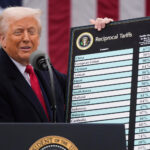
WASHINGTON (AP) Three lower courts have ruled illegal President Donald Trump’s use of emergency powers to impose worldwide tariffs. Now the Supreme Court, with three justices Trump appointed and generally favorable to muscular presidential power, will have the final word. In roughly two dozen emergency appeals, the justices have largely gone along with Trump [.].

Trump’s blue state election gambit panned as ‘more bark than bite’ by expert

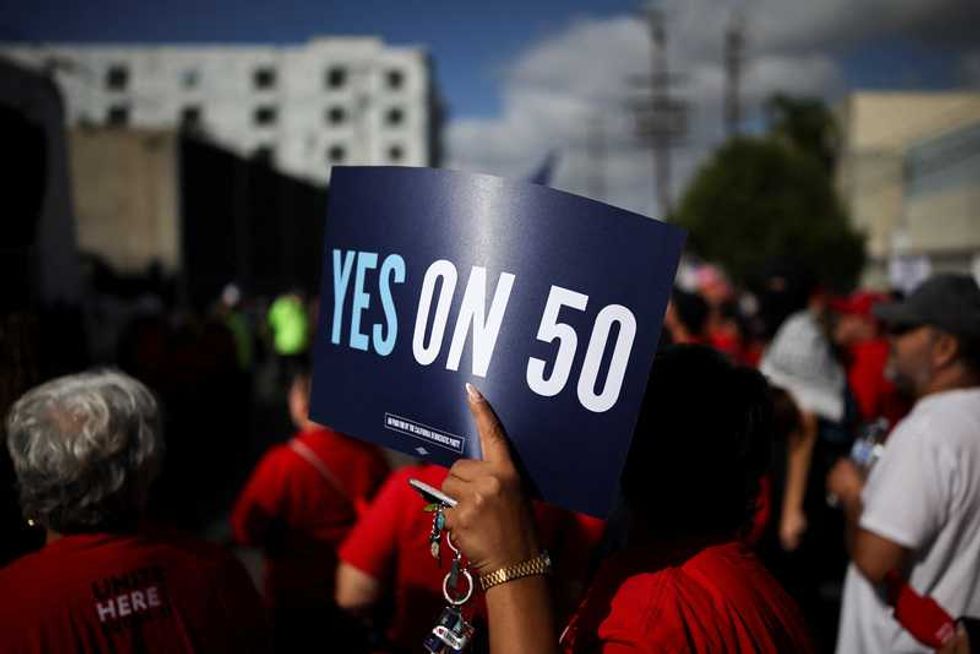
On Tuesday, Slate writer Shirin Ali reports nearly half the country will head to the polls to cast ballots on a range of major questions and offices. However, “President Donald Trump just made a not-so-subtle power grab” to complicate that vote in some blue states. Attorney General Pam Bondi announced that federal monitors will be sent to California and New Jersey to ensure “ballot security,” said Ali, adding that the move has “sparked fear on social media.”California, in particular, is set to vote on Proposition 50, which is Gov. Gavin Newsom’s (D) effort to hand control of the state’s congressional maps to Democratic lawmakers in response to Republican gerrymandering efforts in Texas and elsewhere. If the measure is successful, the state would likely get five additional congressional seats to counter Texas’s mid-decade gerrymander in an attempt to keep the U. S. House under Republican control. Preeminent elections expert Rick Hasen assured Slate that Bondi’s observers “are more bark than bite, likely intended to ‘trigger’ Democrats during the lead-up to a critical vote.” However, this initial attempt to use federal officials to push unsubstantiated claims of voter fraud could lead to federal troops at polling places in the future.“A few days after Bondi’s initial announcement, California countered with its own message to the Trump administration,” said Ali. “State Attorney General Rob Bonta announced that California would send its own state election watchers to watch Bondi’s watchers, while also calling out the Trump administration’s motives. It’s a “nesting-doll” situation as watchers watch watchers, but Hasen said none of the election monitors will have much to do.“I think there’ll be a lot of people standing around doing nothing,” he said, noting that of California’s 58 counties, only five are being targeted. Thankfully, the same states that Bondi is careful to target have built-in freedoms that allow voters to duck her election monitors.“This is not normal,” Hasen said, “I do think we have to take seriously the possibility that people are going to have to get around federal troops if they want to be able to vote, which would be a good reason to vote early and not have to deal with these things on Election Day.”Read the Slate report at this link.
Some lawmakers demand salaries withheld until federal workers get paid

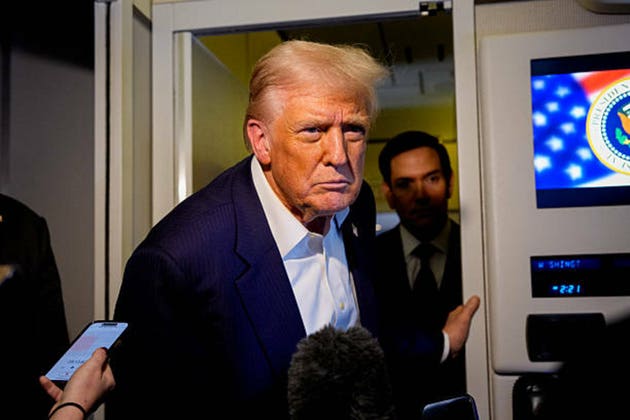
WASHINGTON Some members of Congress are asking for their salaries to be withheld during the government shutdown, while federal workers on Friday missed their first full paycheck since many operations closed on Oct. 1. With no movement toward a deal to end the shutdown, the House remained on a prolonged break from Capitol Hill, the Senate left for its usual long weekend and President Donald Trump prepared to depart for a trip to China, where he will likely focus much more on foreign policy and tariffs than the funding lapse. The president, lawmakers and federal judges all receive their regular paychecks during government shutdowns, unlike the 2 million civilian federal employees and thousands of staffers who work in the legislative branch. Members of Congress are paid $174,000 a year and leaders are paid more. Active duty military members would also normally miss their paychecks, but the Defense Department reprogrammed $8 billion earlier this month to avoid a missed payday for U. S. troops. It’s unclear if the Pentagon can do that again ahead of the Oct. 31 pay date or if there was enough money left to cover those salaries. Pay for CongressUnlike most federal workers, members of Congress have the option to receive their pay as normal, donate their salaries to charity, give the money back to the Treasury, or have their checks withheld during this shutdown. Rhode Island Democratic Rep. Gabe Amo posted a letter Thursday evening from House Chief Administrative Officer Catherine L. Szpindor confirming that House members’ salaries can be held back until after the funding lapse ends. Szpindor wrote that legal requirements, including the 27th Amendment, entitle members of Congress to their pay and that any lawmaker who has their check withheld during a shutdown can request it be distributed at any time. Szpindor did not respond to a request for comment. A spokesperson for Ohio Republican Sen. Jon Husted said the Senate Financial Clerk told their office that while senators are required to be paid, officials can withhold his check until after the shutdown ends, at his request. The Senate disbursing office will continue to cut the check, but Husted will not pick it up until after Congress funds the government, the spokesperson said. Husted doesn’t believe members of Congress should receive their salaries on time when other federal workers cannot, the spokesperson said. A different Senate staffer, speaking on background about the issue, told States Newsroom the salary for another senator was transitioned from direct deposit to a physical paycheck so it could be held by the disbursing office for the duration of the shutdown, at that senator’s request. Members of Congress who have asked for their salaries to be withheld include Colorado Democratic Sen. Michael Bennet, Florida Republican Rep. Kat Cammack, New Jersey Democratic Sen. Andy Kim, Oklahoma Republican Rep. Stephanie Bice and Oregon Democratic Rep. Janelle Bynum, among others. Spokespeople for Trump and Speaker Mike Johnson, R-La., did not respond to a request for comment about whether they are having their salaries withheld during the shutdown. A spokesperson for Senate Majority Leader John Thune, R-S. D., said he is having his paycheck held back. Can lawmakers’ salaries legally be withheld? Congress has voted several times over the years to officially withhold members’ salaries during a shutdown, but none of the bills have ever become law. There have been questions during past funding lapses about whether members’ paychecks could legally be withheld. The nonpartisan Congressional Budget Office wrote in a letter to Iowa Republican Sen. Joni Ernst just before the shutdown began that member pay “is required by the Constitution and is considered mandatory spending.” “Thus, Members of Congress would continue to be paid during a lapse in discretionary appropriations,” CBO Director Phillip L. Swagel wrote. That assessment lines up with a report from the nonpartisan Congressional Research Service, updated in August, that says “Members of Congress continue to receive their pay during a lapse in appropriations for a number of reasons.”Lawmaker salaries “have been provided by a permanent, mandatory, appropriation since” 1981, the report says. The U. S. Constitution, in Article I, Section 6, Clause 1, says: “Senators and Representatives shall receive a Compensation for their Services, to be ascertained by Law, and paid out of the Treasury of the United States.”And the 27th Amendment to the Constitution says: “No law, varying the compensation for the services of the Senators and Representatives, shall take effect, until an election of Representatives shall have intervened.”The CRS report quotes the Government Accountability Office’s principles of federal appropriations law as saying, “The salary of a Member of Congress is fixed by statute and therefore cannot be waived without specific statutory authority.”But the report also points out nothing prevents a member of Congress from accepting the salary and then donating all or part of it back to the Treasury. No options and no paychecks for fedsThat same choice isn’t available for the people who work for members of Congress or those at departments and agencies throughout the executive branch. They must go without their paychecks until after Congress and the president broker a deal to fund the government and end the shutdown. Any worker who manages national security issues, or the protection of life or property, is considered exempt and continues working until the shutdown ends. Any federal employee not in that category is placed on furlough. The Senate was unable to advance multiple bills Thursday that would have provided salaries to some federal employees and contractors during the shutdown. Absent new congressional action, both exempt and non-exempt federal workers are supposed to receive back pay under a 2019 law once government reopens, though Trump and administration officials have cast doubt on whether they will do that for employees in the executive branch. Guidance from the House Committee on Administration says that all employees who work within the legislative branch will receive back pay once a funding bill becomes law. “Neither essential nor furloughed employees are authorized to receive compensation during a lapse in government funding,” the report says. “Federal law statutorily requires retroactive pay for furloughed and essential employees following the end of a lapse in government funding.”This story was published in partnership with Creative Commons. Read the original story here.

Sitemap Index