
The post Crypto Market Turns Cautious in November 2025 What’s Behind the Bearish Shift? appeared com. November 2025 begins with the crypto market sending mixed signals. Bitcoin hovers around $110 K, Ethereum struggles below $4 K, and nearly every top-ranked cryptocurrency is flashing “Sell” or “Strong Sell” on technical charts. Is this a warning of a coming downturn, or simply a healthy cooldown after months of rallying? Let’s examine the global and technical factors shaping this cautious phase and what it could mean for traders this month. Macro & Monetary Headwinds The biggest weight on sentiment right now is the Federal Reserve’s uncertain policy path. After a modest rate cut earlier this quarter, Fed officials have hinted that further easing may not come in December. That hesitation has strengthened the U. S. dollar and lifted Treasury yields, a combination that usually drains liquidity from risk assets including crypto. This “higher-for-longer” scenario encourages investors to take profits and park capital in stablecoins or cash positions until clarity returns. U. S.-China Trade Developments and Tech Rotation Recent progress in U. S.-China trade talks has sparked optimism across the semiconductor and AI sectors. With major U. S. chipmakers signaling renewed access to Chinese markets and onshoring manufacturing back to America, investors are rotating heavily into AI-linked equities. This rotation has short-term consequences for digital assets: as capital flows into tech stocks, crypto loses speculative volume not because confidence is gone, but because attention has shifted temporarily to traditional markets. Post-Rally Exhaustion Across Top Coins Bitcoin’s climb above $110 K marked a psychological ceiling, prompting many traders to secure profits. Altcoins such as Solana (-1. 4 %), BNB (-1. 4 %), Cardano (-2. 2 %), and Dogecoin (-1. 9 %) are showing similar fatigue. Even Hyperliquid (-6 %) and Chainlink (-0. 2 %) reflect mild selling pressure, suggesting the pullback is broad-based, not isolated. The technical indicators confirm this: RSI levels have cooled, MACD lines are flattening, and volume.
Tag: bitcoin

Robert Kiyosaki warns of a “massive crash,” yet Bitcoin holds $110K support. Is this fear-driven caution a setup for BTC’s next big move? The post Bitcoin Price Prediction: Is Kiyosaki’s Crash Warning the Catalyst for a Major BTC Price Movement? appeared first on Cryptonews.

TLDR Robert Kiyosaki has warned that a massive global financial crash could wipe out millions of investors. The financial author urges people to protect their wealth by investing in gold, silver, Bitcoin, and Ethereum. Kiyosaki issued a similar warning in October after U. S. tariffs caused Bitcoin to plunge from $122,000. Bitcoin currently trades at $110,079 [.] The post Robert Kiyosaki Warns ‘Massive Crash’ Could Wipe Out Millions Soon appeared first on CoinCentral.

The post U. S. Entities Hold 73% of Global Crypto Treasuries: Details appeared com. Sentora, the on-chain research shop, grabbed attention today when it tweeted that “US entities hold 73% of global crypto treasury value, showing the country’s dominance in the institutional crypto space.” That huge figure, shared as part of the firm’s ongoing crypto treasury coverage, spotlights how concentrated institutional crypto reserves have become around American organizations. The claim rests on Sentora’s broader Crypto Treasury Tracker, a dashboard the firm maintains that aggregates reserves across public companies, private firms, DAOs, nonprofits and sovereign wallets. Rather than counting only balance-sheet Bitcoin, the tracker aims to map “all crypto reserves” held by entities, merging asset-level detail with entity-level views so users can see who holds what and in which token. That methodology helps explain how a single national cohort, US entities, can account for such a large share: it folds together corporate treasuries, exchange reserves, protocol and fund holdings that are legally domiciled or managed within the United States. From Corporations to Exchanges How big are those treasuries, overall? Recent estimates peg global institutional crypto reserves in the low hundreds of billions. As of today, Sentora’s Crypto Treasury Tracker puts the total near $241 billion, a figure that has roughly tripled year-over-year as more organizations add digital assets to their balance sheets or keep larger liquid coffers on exchanges and in custodial accounts. That scale helps put Sentora’s 73% claim into context: if global treasuries number in the mid-hundreds of billions, US entities controlling roughly three-quarters of that pool represent meaningful market power. Public companies alone already account for very large slices of corporate crypto holdings. CoinGecko’s Bitcoin treasury tracker, which focuses on corporate and government Bitcoin allocations among other assets, lists well over a million BTC held across tracked institutions, a position worth tens or hundreds of billions depending on BTC’s price, and shows.

The post Does a weaker dollar drive Bitcoin price now? appeared com. Bitcoin breached $116,000 for the first time in two weeks, and the usual narrative surfaced: inflation hedge. But the data tells a different story. This cycle, Bitcoin trades less like a consumer-price shield and more like a real-time barometer of dollar liquidity and discount rates. The question isn’t whether Bitcoin hedges inflation, but whether a weaker dollar and falling real yields drive it now. BTC ≠ CPI hedge anymore? The inflation-hedge thesis isn’t wrong, just mistimed. Data suggests that Bitcoin rallied amid liquidity shifts and monetary pivots, not because the Bureau of Labor Statistics printed 3. 1% instead of 3%. CPI measures price levels with a lag. Bitcoin trades forward-looking liquidity and discount rates in real time. Across this cycle, the relationship between Bitcoin and headline inflation weakened while correlations with the dollar index and real yields tightened. A snapshot of directional relationships reveals the shift: Pair Typical Sign Stability What It Reflects BTC × CPI (m/m or y/y) Near zero, unstable Weak, flips frequently Prints are lagged; policy reaction moves BTC, not the CPI print itself BTC × DXY (log returns) Inverse Strengthens in dollar downtrends Global dollar liquidity channel and cross-border risk appetite BTC × 10y real yield (DFII10, Δ) Inverse Time-varying by regime Higher real rates tighten conditions; lower real rates ease financial plumbing Current 30-day Pearson correlations show Bitcoin/DXY at approximately -0. 45 and Bitcoin/DFII10 near -0. 38, while Bitcoin/CPI hovers around zero with frequent sign changes. The 90-day window smooths noise but confirms the pattern: Bitcoin responds to the Fed’s reaction function and dollar liquidity conditions, not the inflation print itself. Why USD strength and real yields transmit into BTC Real yields represent the market’s price of money after inflation. When the 10-year Treasury Inflation-Protected Securities yield rises, the dollar typically firms, global financial conditions tighten, and long-duration.

The world’s largest cryptocurrency continues to solidify its status as the backbone of global digital finance, buoyed by strong institutional [.] The post Bitcoin Price Prediction: BTC Targets $180K, Retail Investors Pin Hopes on AlphaPepe as the Favourite appeared first on Coindoo.

The idea of earning in crypto, especially Bitcoin or stablecoins, is reshaping how employees think about value, savings, and freedom. [.] The post Crypto Payroll Revolution Gains Speed BlockchainFX Touted as the Next Big Crypto for Global Payments appeared first on Coindoo.

TLDR Retail investors lost $17 billion through Bitcoin Treasury stock exposure. Companies raised $86 billion in 2025 to buy Bitcoin, surpassing US IPOs. One-fifth of Bitcoin-linked firms now trade below their net asset value. Strategy’s stock dropped 20%, while Metaplanet lost over 60% in value. Retail investors are now facing heavy losses after chasing Bitcoin [.] The post Bitcoin treasury firms cost retail buyers over $17 billion in 2025 appeared first on CoinCentral.
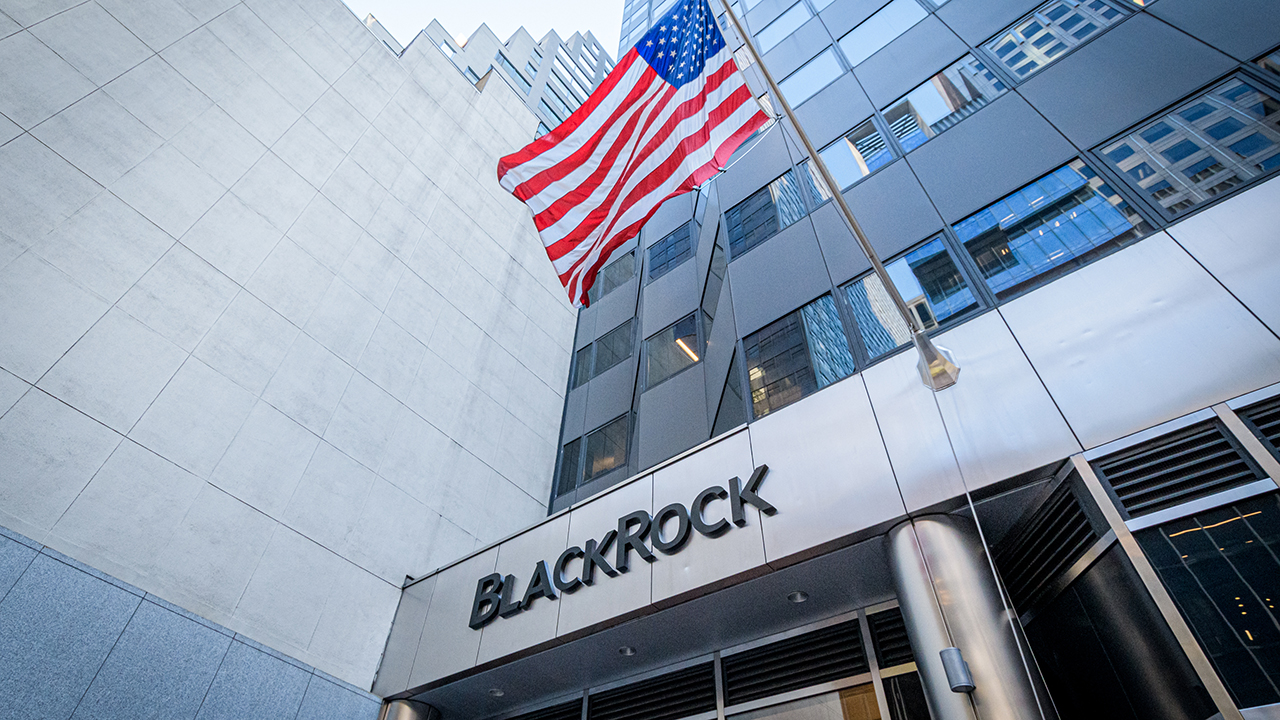
Despite the recent pullback in crypto, BlackRock’s digital ETFs are leading the industry as more retail and investment managers add crypto to their portfolios.

US spot Bitcoin ETFs faced $1. 2B in weekly outflows as Bitcoin fell to a four-month low. BlackRock, Fidelity, and Grayscale saw major redemptions amid Bitcoin’s 10% weekly drop. Schwab says crypto interest is rising, with clients holding 20% of US crypto ETPs. The United States’ spot Bitcoin exchange-traded funds (ETFs) faced a challenging week, with [.] The post US Bitcoin ETFs see $1. 2 Billion in weekly outflows appeared first.