

ARC Raiders features several different Crafting Stations in the workshop, all of which can be upgraded three times. However, not everyone knows what these stations do, what items they need to craft those stations, or how to upgrade them. Therefore, we made this guide to serve as a one-stop shop for all things related to [.] The post All Crafting Stations In ARC Raiders & How to Upgrade Them appeared first on ClutchPoints.
Month: November 2025

The post Cardano since late 2024, ranging between $0. 60 and $0. 80, with buyers and sellers soon reaching parity. Currently, the symmetrical triangle pattern, which was at $0. 62, represents tightened market liquidity, which often precedes major breakouts, although major drops below $0. 64 demonstrate short-term weakness. Analysts also predict possible major upswings to $1. 00 or even $1. 70 if the $0. 75 level is breached, although such modest upside is rendered insignificant when contrasted with the major upside offered in newer DeFi alternatives. Turning the spotlight in the current cryptocurrency news, the tensions in Cardano (ADA) excite few astute traders, although Mutuum Finance (MUTM) at $0. 035 represents the current best cryptocurrency to invest in, offering rewards much higher than what ADA offers. Cardano’s Symmetrical Pattern Cardano is inside a symmetrical triangle with lows and highs moving to meet at an apex on the 12-hour USDT chart. This makes the market undecided, with support levels being dynamically matched by buyers against an upper line. Currently at $0. 62, ADA strongly holds on to its support level, which represents the ascending pattern line, and has remained unchanged ever since the formation of the pattern. Analysts’ targets stand at $1. 00, $1. 30, and $1. 60, once the breakout at $0. 75 to $0. 80 occurs. However, the momentum indicators show oversold levels, and missing the $0. 64 level-of-recovery might push the coin to $0. 60. Although such an arrangement reveals growth, Cardano’s projects’ slow approach opens avenues in other areas. Consequently, people interested in the best cryptocurrency to invest in would rather look at projects that provide immediate investment options compared to Cardano. Card Purchases Unlock Easy Entry Mutuum Finance has made investing in their MUTM tokens easily accessible by introducing card purchase functionality, which previously hindered the adoption process in the cryptocurrency world. Currently,.

This article contains references to products from our advertisers and/or partners, and we may receive compensation when you click on.

Sorry, but they are pointless. The left laughs and loves when when we do them. Nothing else matters but stoping the Globalists and the left. This may anger some. But the left is the mortal enemy.

Livvy Dunne lands luxe West Village apartment for $2M after being denied Babe Ruth’s former pad
The post Ripple Expands Enterprise Reach With Another Acquisition of Wallet Platform appeared com. The acquisition of wallet platform Palisade aligns with Ripple’s strategy to evolve from a fintech provider into a core infrastructure player for institutional blockchain finance. The acquisition marks Ripple’s fourth major deal in 2025, following purchases of Hidden Road ($1. 25B), Rail ($200M), and GTreasury ($1B). Blockchain startup Ripple continues to make significant market moves, with the latest being the acquisition of a wallet-as-a-service (WaaS) platform, Palisade. Through this acquisition, the XRP-parent firm aims to expand its institutional custody and payments capabilities. Ripple Acquires Palisade to Strengthen Institutional Blockchain Infrastructure The latest acquisition of Palisade’s wallet technology will help in the integration into Ripple’s next-generation custody and payments infrastructure, offering secure, enterprise-grade solutions for institutions globally. With this acquisition, Ripple gains full-stack control of the digital asset lifecycle, leveraging XRP for instant settlement, RLUSD for institutional liquidity, and Palisade’s technology for multi-asset custody, as reported by CNF. The integration marks a major step toward Ripple’s vision of becoming a foundational layer for institutional blockchain finance. Ripple noted that this move confirms its transition beyond traditional fintech tools. Besides, it will also help the blockchain firm position itself to build the underlying architecture for a new financial system powered by blockchain technology. Speaking on the development, Monica Long, President of Ripple, said: Secure digital asset custody unlocks the crypto economy and is the foundation that every blockchain-powered business stands on, that’s why it’s central to Ripple’s product strategy. The combination of Ripple’s bank-grade vault and Palisade’s fast, lightweight wallet makes Ripple Custody the end-to-end provider for every institutional need, from long-term storage to real-time global payments and treasury management. Blockchain Firms on Strong Acquisition Spree RP-linked fintech firm has been.
Drug complaint at Statesville hotel leads to arrest
ALEXANDRIA, Va. A federal judge on Wednesday ordered prosecutors in the criminal case of former FBI Director James Comey to produce to defense lawyers a trove of materials from the investigation, saying he was concerned the Justice Department’s position had been to “indict first” and investigate second.

Zohran Mamdani, the new mayor-elect of New York City, was born in Uganda to parents of Indian origin, and his family emigrated when he was a child.
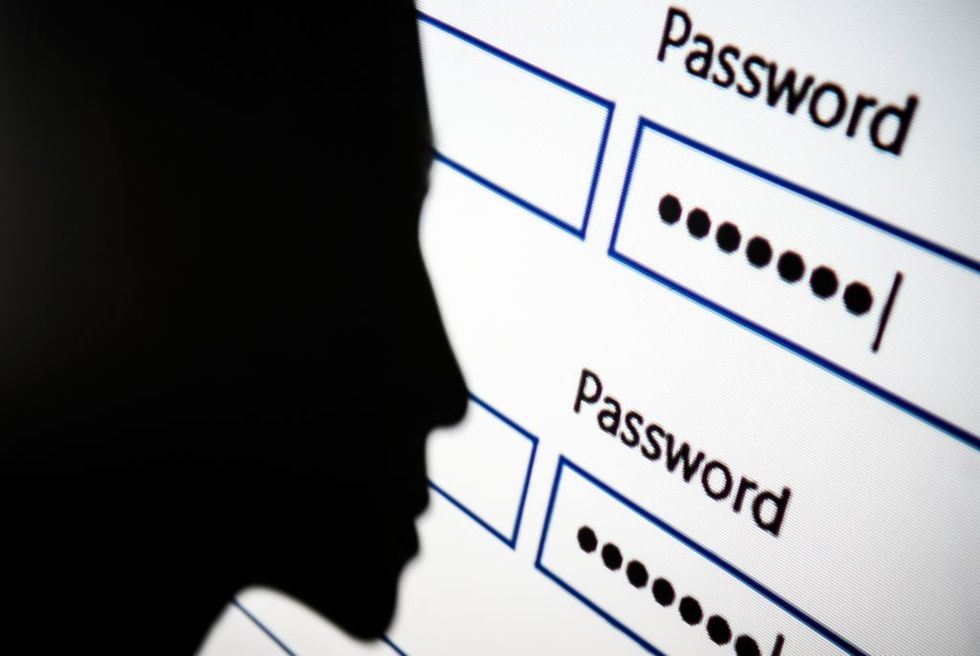
DEEP DIVE From stolen military credentials to AI-generated personas seamlessly breaching critical infrastructure, digital identity fraud is rapidly escalating into a frontline national security threat. This sophisticated form of deception allows adversaries to bypass traditional defenses, making it an increasingly potent weapon. The 2025 Identity Breach Report, published by AI-driven identity risk firm Constella Intelligence, reveals a staggering increase in the circulation of stolen credentials and synthetic identities. The findings warn that this invisible epidemic, meaning it’s harder to detect than traditional malware, or it blends in with legitimate activity, is no longer just a commercial concern-it now poses a serious threat to U. S. national security.“Identity verification is the foundation of virtually all security systems, digital and physical, and AI is making it easier than ever to undermine this process,” Mike Sexton, a Senior Policy Advisor for AI & Digital Technology at national think tank Third Way, tells The Cipher Brief. “AI makes it easier for attackers to simulate real voices or hack and steal private credentials at unprecedented scale. This is poised to exacerbate the cyberthreats the United States faces broadly, especially civilians, underscoring the danger of Donald Trump’s sweeping job cuts at the Cybersecurity and Infrastructure Security Agency.”The Trump administration’s proposed Fiscal Year 2026 budget would eliminate 1, 083 positions at CISA, reducing staffing by nearly 30 percent from roughly 3, 732 roles to around 2, 649. Save your virtual seat now for The Cyber Initiatives Group Winter Summit on December 10 from 12p 3p ET for more conversations on cyber, AI and the future of national security. The Industrialization of Identity TheftThe Constella report, based on analysis of 80 billion breached records from 2016 to 2024, highlights a growing reliance on synthetic identities-fake personas created from both real and fabricated data. Once limited to financial scams, these identities are now being used for far more dangerous purposes, including espionage, infrastructure sabotage, and disinformation campaigns. State-backed actors and criminal groups are increasingly using identity fraud to bypass traditional cybersecurity defenses. In one case, hackers used stolen administrator credentials at an energy sector company to silently monitor internal communications for more than a year, mapping both its digital and physical operations.“In 2024, identity moved further into the crosshairs of cybercriminal operations,” the report states. “From mass-scale infostealer infections to the recycling of decade-old credentials, attackers are industrializing identity compromise with unprecedented efficiency and reach. This year’s data exposes a machine-scale identity threat economy, where automation and near-zero cost tactics turn identities into the enterprise’s most targeted assets.”Dave Chronister, CEO of Parameter Security and a prominent ethical hacker, links the rise in identity-based threats to broader social changes.“Many companies operate with teams that have never met face-to-face. “This has created an environment where identities are increasingly accepted at face value, and that’s exactly what adversaries are exploiting.”When Identities Become WeaponsThis threat isn’t hypothetical. In early July, a breach by the China-linked hacking group Volt Typhoon exposed Army National Guard network diagrams and administrative credentials. U. S. officials confirmed the hackers used stolen credentials and “living off the land” techniques-relying on legitimate admin tools to avoid detection. In the context of cybersecurity, “living off the land” refers to attackers (like the China-linked hacking group Volt Typhoon) don’t bring their own malicious software or tools into a compromised network. Instead, they use the legitimate software, tools, and functionalities that are already present on the victim’s systems and within their network.“It’s far more difficult to detect a fake worker or the misuse of legitimate credentials than to flag malware on a network,” Chronister explained. Unlike traditional identity theft, which hijacks existing identities, synthetic identity fraud creates entirely new ones using a blend of real and fake data-such as Social Security numbers from minors or the deceased. These identities can be used to obtain official documents, government benefits, or even access secure networks while posing as real people.“Insider threats, whether fully synthetic or stolen identities, are among the most dangerous types of attacks an organization can face, because they grant adversaries unfettered access to sensitive information and systems,” Chronister continued. Insider threats involve attacks that come from individuals with legitimate access, such as employees or fake identities posing as trusted users, making them harder to detect and often more damaging. Constella reports these identities are 20 times harder to detect than traditional fraud. Once established with a digital history, a synthetic identity can even appear more trustworthy than a real person with limited online presence.“GenAI tools now enable foreign actors to communicate in pitch-perfect English while adopting realistic personas. Deepfake technology makes it possible to create convincing visual identities from just a single photo,” Chronister said. “When used together, these technologies blur the line between real and fake in ways that legacy security models were never designed to address.”Washington Lags BehindU. S. officials acknowledge that the country remains underprepared. Multiple recent hearings and reports from the Department of Homeland Security and the House Homeland Security Committee have flagged digital identity as a growing national security vulnerability-driven by threats from China, transnational cybercrime groups, and the rise of synthetic identities. The committee has urged urgent reforms, including mandatory quarterly “identity hygiene” audits for organizations managing critical infrastructure, modernized authentication protocols, and stronger public-private intelligence sharing. Meanwhile, the Defense Intelligence Agency’s 2025 Global Threat Assessment warns:“Advanced technology is also enabling foreign intelligence services to target our personnel and activities in new ways. The rapid pace of innovation will only accelerate in the coming years, continually generating means for our adversaries to threaten U. S. interests.”An intelligence official not authorized to speak publicly told The Cipher Brief that identity manipulation will increasingly serve as a primary attack vector to exploit political divisions, hijack supply chains, or infiltrate democratic processes. Need a daily dose of reality on national and global security issues? -Force, agreed that a unified national system is needed.“The United States needs a national digital identity framework-but one built with a balance of security, privacy, and interoperability,” Dwyer told The Cipher Brief. “As threat actors increasingly target digital identities to compromise critical infrastructure, the stakes for getting identity right have never been higher.”He emphasized that any framework must be built on multi-factor authentication, phishing resistance, cryptographic proofs, and decentralized systems-not centralized databases.“Public-private collaboration is crucial: government agencies can serve as trusted identity verification sources (e. g., DMV, passport authorities), while the private sector can drive innovation in delivery and authentication,” Dwyer added. “A governance board with cross-sector representation should oversee policy and trust models.”Digital identities are no longer just a privacy concern-they’re weapons, vulnerabilities, and battlegrounds in 21st-century conflict. As foreign adversaries grow more sophisticated and U. S. defenses lag behind, the question is no longer if, but how fast America can respond. The question now is whether the United States can shift fast enough to keep up. Read more expert-driven national security insights, perspective and analysis in The Cipher Brief because National Security is Everyone’s Business.